NE DSA REGIONAL MEETING GROUP PHOTO
I am a NY Dragonfly & Damselfly Surveyor since 2004 when I participated in this survey through Audubon New York for the NY Natural Heritage Museum & the Department of Environmental Conservation
Showing posts with label Northeast. Show all posts
Friday, June 28, 2013
2013 Northeast Dragonfly Society of the Americas Regional Meeting Group Photo - June 22
Labels:
2013,
Connecticut,
CT,
damselflies,
dragonflies,
Dragonfly Society of America,
Dragonfly Society of the Americas,
DSA,
Griswold,
group photo,
Northeast,
Odonata,
odonates,
Regional
Thursday, June 27, 2013
2013 Northeast Dragonfly Society of the Americas Regional Meeting June 21
Day two of the DSA meeting Mike Thomas led a carpool of vehicles to multiple locations around Connecticut in hopes of finding some elusive odonates to add to the states list of recorded species.
![]() |
| Ebony Jewelwing (Calopteryx maculata) female |
Devil's Hopyard State Park
East Haddam, CT
East Haddam, CT
![]() |
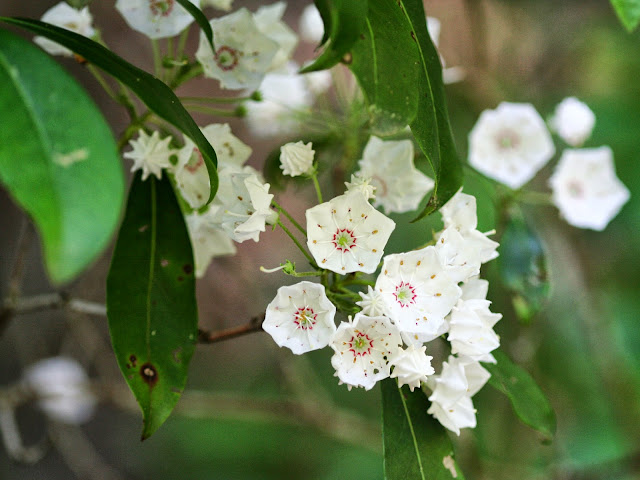
| Mountain Laurel |
________________________________________________________________________
East Haddam Meadows State Park
Salmon River Boat Launch
Labels:
2013,
Argia,
Clubtail,
Connecticut,
CT,
Damselfly,
Dragonfly,
Dragonfly Society of America,
Dragonfly Society of the Americas,
Dragonhunter,
DSA,
Gomphus,
Griswold,
Hagenius,
Northeast,
Rhode Island,
RI
Friday, June 10, 2011
Swamp Darners (Epiaeschna heros) on Fire Island
A small swarm of Swamp Darners were on Fire Island. The Island is surrounded by ocean water so the Darners may have been migrating to find a more suitable freshwater habitat. They are one of our largest Darners at 3.5 inches long. As its name implies it can be found in swamps. It also can be found in shady ponds and slow streams.
Monday, May 16, 2011
Start of Dragonfly and Damselfly Season on Long Island
Some Dragonflies like the Common Green Darner have migrated back into our area. Other Dragonflies and Damselflies have begun to emerge from our ponds, streams and rivers. The Common Green Darner (Anax junius) is one of our earliest migrants and the Eastern Forktail (Ischnura verticalis) is one of our early emergers. ![]() |
| This Eastern Forktail male was found on DEC property in Manorville |
There are other species seen in this area which has a sandy-bottomed fishless pond. Other species that have been seen here are the Tiger Salamanders, Spoonleaf Sundews, Tiger Beetles, Cicada Killers, Red Velvet Ants, Sweetflag Spreadwings and other dragonflies and damselflies. More species will be added as they are identified.
![]() |
| Also on the same DEC property was this Juvenal's Duskywing and the Lanceleaf Violet below. |
Thursday, May 5, 2011
2011 Northeast Regional Meeting of the Dragonfly Society of the Americas
Message from Hal White:
Now that a few Odonates are starting to fly on the Delmarva Peninsula despite the dismal weather, it is time to think ahead to when there will be a lot more action in midsummer.
The 2011 Northeast Regional Meeting of the Dragonfly Society of the Americas will be held on the Delmarva Peninsula from Thursday evening, July 14 to Sunday, July 17.
Now that a few Odonates are starting to fly on the Delmarva Peninsula despite the dismal weather, it is time to think ahead to when there will be a lot more action in midsummer.
The 2011 Northeast Regional Meeting of the Dragonfly Society of the Americas will be held on the Delmarva Peninsula from Thursday evening, July 14 to Sunday, July 17.
The base of operations will be in Dover, Delaware at Delaware State University. A block of 25 rooms have been reserved at the Hampton Inn nearby at $89/night. The room rate will be held for registrations until June 22 provided the block is not filled. A website providing registration (registration is free, but please register if planning to attend), housing information, meeting schedule, regional information, and species lists for various habitats is at: http://www.udel.edu/chem/ white/NEDSA2011/NEDSA2011- HomePg.html.
The Delmarva Peninsula includes the state of Delaware, the Eastern Shore (of the Chesapeake Bay) of Maryland, and two counties of Virginia. Except for the northernmost parts of Delaware and Maryland, this is on the Coastal Plain with elevations less than 100 feet above sea level.
While the Delmarva Peninsula is largely agricultural, there are numerous state parks and other natural areas that support interesting Odonata populations and distinctive habitats. For example, the ponds produced by an abandoned sand mining area in Maryland near the border of Delaware has been surveyed extensively in recent years has turned up the following: Somatochlora georgiana (Coppery Emerald), Celithemis fasciata (Banded Pennant), Celithemis verna (Double-ringed Pennant), Erythrodiplax minuscula (Little Blue Dragonlet), Nannothemis bella (Elfin Skimmer), Libellula flavida (Yellow-sided Skimmer), Enallagma dubium (Burgundy Bluet), Enallagma pallidum (Pale Bluet), Enallagma weewa (Blackwater Bluet), Nehalennia integricollis (Southern Sprite), and Telebasis byersi (Duckweed Firetail) that are not often encountered in the Northeast US and should still be flying at meeting time.
The Pocomoke River watershed is another area that supports interesting species often near their northern limit of distribution on the East Coast. Then there are salt marshes and tidal fresh water areas where other species like Libellula needhami (Needham's Skimmer), Brachymesia gravida (Four-spotted Skimmer), and Erythrodiplax berenice (Seaside Dragonlet) can be found.
Nearly 130 species are known from Delmarva and hopefully new ones will be found during the meetings. These species are discussed in, “Natural History of Delmarva Dragonflies and Damselflies”. The book should be available in about a month from Rowman & Littlefield http://www.rowmanlittlefield. com/:
toll free (800) 462-6420 local (717) 794-3800 e-mail: orders@rowman.com
Our Meeting Organizers :
Kitt Heckscher (Delaware State University)
Jim McCann (Maryland Department of Natural Resources)
Hal White (University of Delaware)
Jim White (Delaware Nature Society)
The Delmarva Peninsula includes the state of Delaware, the Eastern Shore (of the Chesapeake Bay) of Maryland, and two counties of Virginia. Except for the northernmost parts of Delaware and Maryland, this is on the Coastal Plain with elevations less than 100 feet above sea level.
While the Delmarva Peninsula is largely agricultural, there are numerous state parks and other natural areas that support interesting Odonata populations and distinctive habitats. For example, the ponds produced by an abandoned sand mining area in Maryland near the border of Delaware has been surveyed extensively in recent years has turned up the following: Somatochlora georgiana (Coppery Emerald), Celithemis fasciata (Banded Pennant), Celithemis verna (Double-ringed Pennant), Erythrodiplax minuscula (Little Blue Dragonlet), Nannothemis bella (Elfin Skimmer), Libellula flavida (Yellow-sided Skimmer), Enallagma dubium (Burgundy Bluet), Enallagma pallidum (Pale Bluet), Enallagma weewa (Blackwater Bluet), Nehalennia integricollis (Southern Sprite), and Telebasis byersi (Duckweed Firetail) that are not often encountered in the Northeast US and should still be flying at meeting time.
The Pocomoke River watershed is another area that supports interesting species often near their northern limit of distribution on the East Coast. Then there are salt marshes and tidal fresh water areas where other species like Libellula needhami (Needham's Skimmer), Brachymesia gravida (Four-spotted Skimmer), and Erythrodiplax berenice (Seaside Dragonlet) can be found.
Nearly 130 species are known from Delmarva and hopefully new ones will be found during the meetings. These species are discussed in, “Natural History of Delmarva Dragonflies and Damselflies”. The book should be available in about a month from Rowman & Littlefield http://www.rowmanlittlefield.
toll free (800) 462-6420 local (717) 794-3800 e-mail: orders@rowman.com
Our Meeting Organizers :
Kitt Heckscher (Delaware State University)
Jim McCann (Maryland Department of Natural Resources)
Hal White (University of Delaware)
Jim White (Delaware Nature Society)
Labels:
2011,
Damselfly,
Delaware,
Delmarva Peninsula,
Dover,
Dragonfly,
Dragonfly Society of the Americas,
Hal White,
Jim McCann,
Jim White,
Kitt Heckscher,
Meeting,
Northeast,
odonates,
Pocomoke,
Regional
Subscribe to:
Posts (Atom)


